
Unpacking Canada’s Astonishing Number of Lakes
Imagine a world map, not with borders marking nations, but with shimmering blue dots representing every lake, big and small. Now, picture the overwhelming majority of those dots clustered within the boundaries of a single country. This isn’t a cartographer’s fantasy; it’s the astounding reality of Canada, a nation whose freshwater abundance defies belief. The claim often tossed around, almost too grand to be true, is that Canada has more lakes than all other countries in the world combined. While pinning down an exact, universally agreed-upon global count is notoriously difficult, the spirit of this statement holds true, painting Canada as an unparalleled global reservoir of freshwater. This isn’t just a quirky geographic fact; it’s a defining characteristic that has shaped its geology, climate, culture, economy, and very identity. From the serene solitude of a remote glacial tarn to the sprawling expanse of the Great Lakes, Canada’s aquatic landscape is a testament to natural grandeur and an invitation to endless exploration.
The Geological Tapestry: How Canada Became the Land of Lakes
To understand Canada’s phenomenal lake count, we must journey back in time, millions of years, to an era dominated by the colossal forces of glaciation. The Canadian Shield, a vast expanse of ancient, exposed Precambrian rock that covers nearly half of the country, is the canvas upon which this watery masterpiece was painted. Over the past 2.6 million years, Canada experienced numerous glacial periods, with massive ice sheets, sometimes up to three kilometers thick, repeatedly advancing and retreating. As these colossal glaciers moved, they acted like gigantic bulldozers and sandpaper. They meticulously scoured the bedrock, grinding down hills, carving out valleys, and deepening existing depressions. The immense weight of the ice sheets depressed the Earth’s crust, and as the glaciers melted, the land began to slowly rebound unevenly, a process called isostatic uplift. This irregular, scoured landscape, combined with the uneven rebound, left behind countless basins and depressions. When the glaciers finally melted, they released unimaginable volumes of freshwater that filled the myriad hollows left by the ice, forming the countless lakes, ponds, and wetlands we see today. The hard, impermeable bedrock of the Shield, coupled with the glacial erosion and subsequent meltwater, created the perfect, watertight conditions for water to collect and remain, literally engineering Canada into the ultimate lake-filled landscape.

The Numbers Game: Counting the Uncountable
While the claim of “more lakes than all other countries combined” is impressive, arriving at a precise figure for Canada, let alone the rest of the world, is incredibly complex. First, there’s the challenge of defining a “lake.” Does a small pond count? What about a body of water that only exists seasonally? Different methodologies and minimum size thresholds drastically change the count. Second, many of Canada’s lakes are small, remote, and often obscured by dense boreal forest or arctic tundra, making satellite mapping and ground surveys an immense challenge. However, based on satellite imagery and advanced geospatial analysis, various studies have attempted to quantify Canada’s aquatic wealth. While exact numbers vary, conservative estimates typically place the number of lakes larger than 0.1 square kilometers (10 hectares) at over two million. If you include smaller bodies of water and ponds, the number skyrockets far higher. For comparison, the vast majority of the world’s freshwater lakes are concentrated in a handful of countries in the Northern Hemisphere that experienced significant glaciation. Finland, often called the “Land of a Thousand Lakes,” has about 187,000, and Sweden has around 100,000. Even Russia, with its immense size, falls far short of Canada’s two million-plus. Regardless of the precise methodology, the sheer density and volume of freshwater bodies within Canada are unparalleled, solidly cementing its reputation as the global leader in lakes and making the viral claim essentially correct in spirit.
Beyond the Numbers: The Significance of Canada’s Lakes
The abundance of lakes in Canada is more than just a statistical anomaly; it is fundamental to the country’s existence and future. Canada holds approximately 20% of the world’s freshwater resources, an increasingly strategic and valuable asset in a world facing water scarcity. These lakes feed major rivers, supply communities, and sustain vast ecosystems. The diverse range of lake types supports an incredible variety of aquatic and terrestrial life, making them critical biodiversity hotspots for everything from fish and waterfowl to moose and beavers. These vast bodies of water also play a role in climate regulation, moderating local and regional temperatures and influencing weather patterns. Economically, lakes are major drivers. They are magnets for tourism, attracting visitors for fishing, boating, kayaking, swimming, and camping, with “cottage country,” particularly around the Great Lakes, forming a multi-billion dollar industry. Furthermore, many of Canada’s major rivers, fed by lakes, are harnessed for hydroelectric power, providing clean, renewable energy that powers much of the country.
Cultural Identity and the Blue Heart
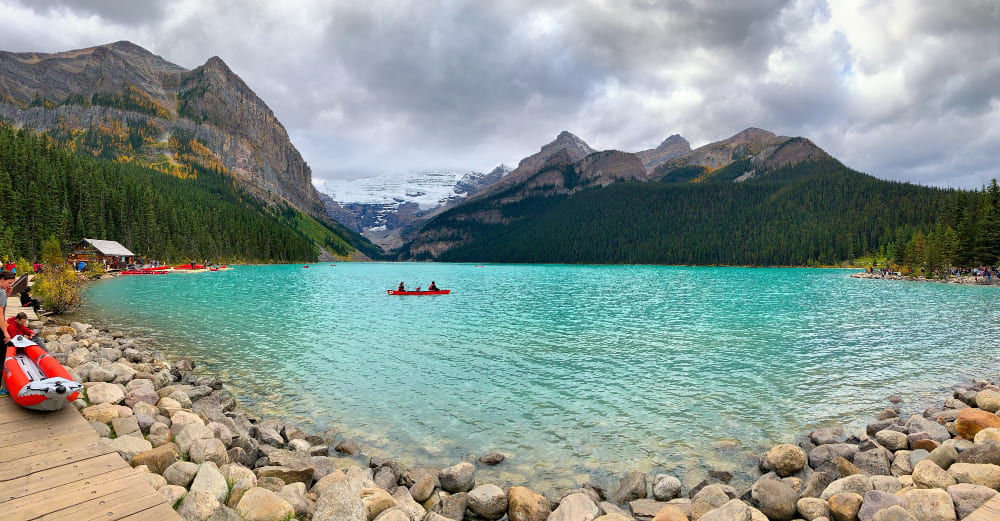
More profoundly than any economic or environmental factor, lakes are deeply woven into the Canadian identity. From the cherished traditions of a summer getaway to the serenity of a winter ice-skating rink, they provide essential spaces for recreation, relaxation, and a connection with nature. They are central to Indigenous cultures, often holding spiritual significance and providing essential resources for millennia. The iconic image of a canoe on a pristine, calm lake against a backdrop of boreal forest is quintessential Canada—a symbol of exploration, quiet solitude, and rugged natural beauty. This aquatic landscape has dictated where communities were founded, provided the original highways for Indigenous peoples and the fur trade, and continues to define the national character as one deeply connected to the wilderness.

Challenges and Conservation: Protecting a Priceless Resource
Such an immense and valuable resource comes with immense responsibility. Canada’s lakes face a growing number of threats, particularly from climate change, which leads to reduced ice cover, altered water levels, increased evaporation, and changes in aquatic ecosystems. Pollution from agricultural runoff, industrial discharge, and urban development introduces contaminants that can lead to harmful algal blooms and impact aquatic life. Additionally, the introduction of invasive species, such as zebra mussels, can outcompete native species and disrupt entire food webs. Pressures from overdevelopment around shorelines also contribute to habitat loss and water quality strain. Conservation efforts are therefore critical and must involve a multi-pronged approach: implementing and enforcing strict environmental regulations, integrating the traditional ecological knowledge of Indigenous peoples, conducting scientific research to monitor the health of these ecosystems, and engaging the public on the importance of sustainable practices. Effective stewardship requires ongoing cooperation, especially for shared waters like the Great Lakes, to ensure that this vast blue heart of the nation remains healthy for generations to come.
Conclusion: A Global Treasure
Canada’s extraordinary lake count is a defining geographic feature, a stunning legacy of ice and time, that has shaped its landscape, supported its biodiversity, fueled its economy, and forged its very soul. From the vast, iconic Great Lakes to the countless unnamed puddles sparkling in the boreal forest, these bodies of water are more than just statistics; they are vital, living systems that underpin life itself. As the world increasingly grapples with environmental challenges, Canada’s role as a steward of such an immense freshwater treasury becomes ever more critical. The future of Canada, and indeed the world’s freshwater security, will be intricately linked to the health and vitality of this unparalleled lakeside giant.